Not every headache has a mechanical cause, and not every mechanical cause responds to chiropractic. My approach: a thorough history and neurological screen, honest filtering against red flags, and if the headache pattern fits a mechanical neck-driven cause, a care plan tailored to you. No promises I cannot keep.
Real cases from Dr Mark Whitfield's clinic. Patient details changed, individual results vary.
A 74 year old maintenance patient came in stiff and sore all over. Here is what we did and how she pulled up.
Read the case →A 66 year old patient came in for a pre-flight check after left pelvic joint pain the week before. Here is what we did and why pelvic joints tend to lock up on long travel.
Read the case →A 45 year old regular patient hurt his neck lifting on Monday and came in with headaches by Thursday. Here is how we worked through it.
Read the case →The basics
Headaches and migraines can come from upper cervical joint restriction (particularly C1 and C2), tension in the upper traps and suboccipital muscles, postural strain, jaw or sinus issues, vascular causes, hormonal shifts, dehydration, or medication side effects. The approach for each is different, which is why the history-taking step matters.
Mechanical headaches (ones driven by the neck) often respond well to chiropractic. Non-mechanical headaches need a different pathway. My job on the first visit is to work out which bucket your headache sits in, and if the answer is "not mechanical", I refer you to the right person rather than treating it myself.
Our care approach
When did the headaches start, pattern, triggers, locations on the head, duration, associated symptoms (vision, nausea, vomiting, dizziness), family history of migraine, medication history. Full picture before I touch anything.
Blurred vision, dizziness, nausea, vomiting, weakness, sudden visual change, worst-headache-ever onset, headache after head strike, or any neurological finding. If any are present, I refer to a GP or emergency department and do not adjust until cleared.
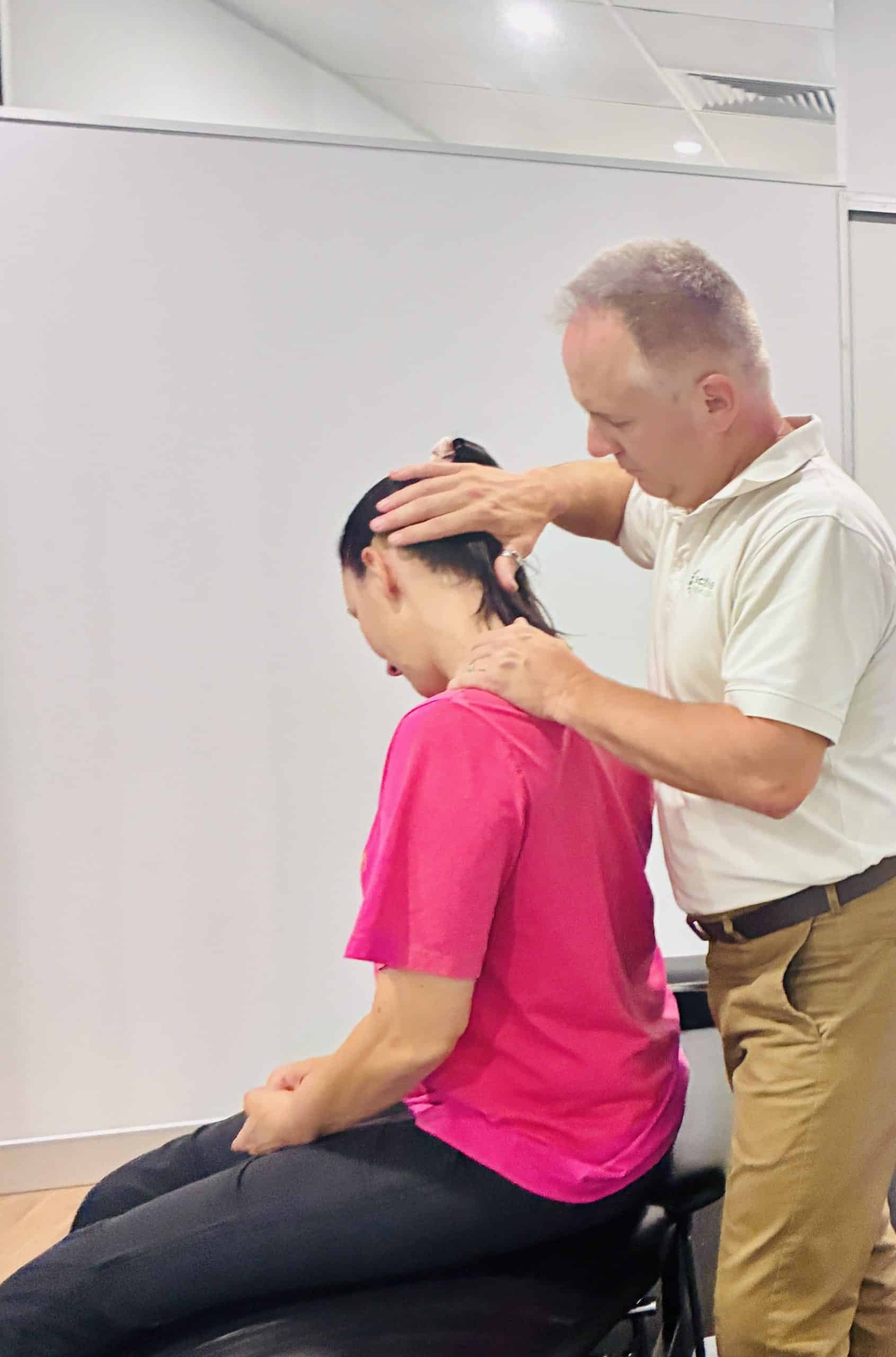
Cervical range of motion with particular attention to the upper neck (C1 and C2), palpation of suboccipital and upper trap muscles, orthopaedic testing, basic neurological screen. Imaging referral if indicated.
For mechanical headache patterns, typically 12 visits over 6 to 8 weeks with a progress exam at visit 12. If the pattern is not mechanical or screens for anything concerning, I refer rather than treat.
Not every headache responds to chiropractic. The honest conversation at the first visit is which bucket your headache sits in. If it is mechanical, I am well placed to help. If it is not, I will say so and point you towards who is.
 Dr Mark WhitfieldB.Sc.M.Chiropractic - Corrective Chiropractic Calamvale
Rebates + coverage
Headache and migraine assessments are covered under most private health extras, WorkCover claims (where injury-related), DVA cards, and Medicare EPC plans when a GP has referred.
Common questions
If the headache started suddenly and is the worst you have ever had, if it followed a head strike, or if it comes with blurred vision, slurred speech, weakness on one side, loss of coordination, or any sudden visual change: go to an emergency department or your GP first. Headaches with fever, neck stiffness and rash: same. These are red flags that need medical screening before any manual treatment.
Some migraine sufferers find upper cervical adjustment reduces the frequency or intensity of their episodes, particularly where there is a mechanical trigger (neck tension before an episode, postural strain, upper cervical restriction). Others find it makes no difference and need medication-led management instead. I do not promise outcomes before assessing, and I am upfront about which pattern I am seeing in your history.
A strain in the lower neck tightens the upper traps and lower cervical area, which pulls the upper neck (C1 and C2) into protective tightness. The upper neck refers pain forward over the head, which is why a headache often arrives a day or two after a lifting or whiplash injury. The lifting-to-headache case is a good example.
Not routinely. If the history, pattern, or examination indicates imaging would help clarify the picture, I refer to a local radiology clinic. You attend a Report of Findings visit once results are back so we go through them together.
C1 and C2 are the top two vertebrae of the neck, directly under the skull. The joints there carry a disproportionate amount of head movement and sit next to major nerves that refer into the head and face. Restriction at C1-C2 is a very common mechanical driver of headaches, which is why the upper neck is a specific focus during a headache-focused examination.
For mechanical headache patterns, I usually have a sense within the first 3 or 4 visits whether we are moving in the right direction. The formal progress exam at visit 12 is where I measure outcomes against day one. If the pattern is not shifting, I say so and change the plan, rather than keep going. More on how many visits here.
A thorough first-visit screen. Red flags cleared first. Honest conversation about whether chiropractic fits your pattern.
Answered by Dr Mark Whitfield from real patient visits at the Calamvale clinic.
Tension builds in the upper traps and lower cervical area after a strain, which pulls C1 and C2 into protective tightness. The upper neck refers pain forward over the head, so headaches often arrive a day or two after the initial neck injury.
When the headache is mechanical (coming from the neck), adjustments can be effective. I rule out non-mechanical causes first through history and examination, then release the specific joints involved. Adjustments do not go anywhere near the head itself.
Blurred vision, dizziness, nausea, vomiting, weakness, any sudden visual change, worst-headache-ever onset, headache after a head strike, or headache with fever and neck stiffness. If any of those are present I refer to a GP or hospital rather than treat.
Yes. Prolonged sitting on flights or long drives can lock the upper neck and set off a mechanical headache a day or two later. Standing, walking the aisle, and simple neck mobility on long travel helps. The Uluru trip case walks through exactly this pattern.
Live booking. Confirmation sent within business hours.