Lower back pain is the single most common reason patients book in with me. My approach: a thorough initial consult, an honest conversation about what may help in your specific case, and a care plan tailored to you. No promises I cannot keep. No pressure to commit.
Real cases from Dr Mark Whitfield's clinic. Patient details changed, individual results vary.
A 69 year old man came back to us with acute lower back pain and pain running down both legs. Here is how we cleared it and what a Medicare EPC visit looked like at the counter.
Read the case →A 49 year old sporadic patient came in on consecutive days with acute right sacroiliac pelvic pain. Here is how we structured the two visits, what the drop table added to the manual work, and how the medical certificate was handled.
Read the case →An active 49 year old patient returned with the same left pelvic and leg pain she had cleared two months earlier, flared after a gym session and a month overseas. Here is how we expect previously treated patients to respond on a second episode.
Read the case →The basics
Lower back pain can come from locked joints in the lumbar spine or sacroiliac pelvis, disc irritation, muscle strain, nerve compression, or referred pain from the hips or abdomen. In my experience, more than one of these is often happening at once, which is why assessment matters before anyone starts treating anything.
Because the cause matters for the approach, I do not recommend care until I have done a proper assessment. I am careful not to make claims about outcomes until I know what I am looking at.
Our care approach
When did it start, what triggered it, what eases it, what makes it worse. Prior injuries, pregnancy history, surgery history, any red flags. The full picture comes first.
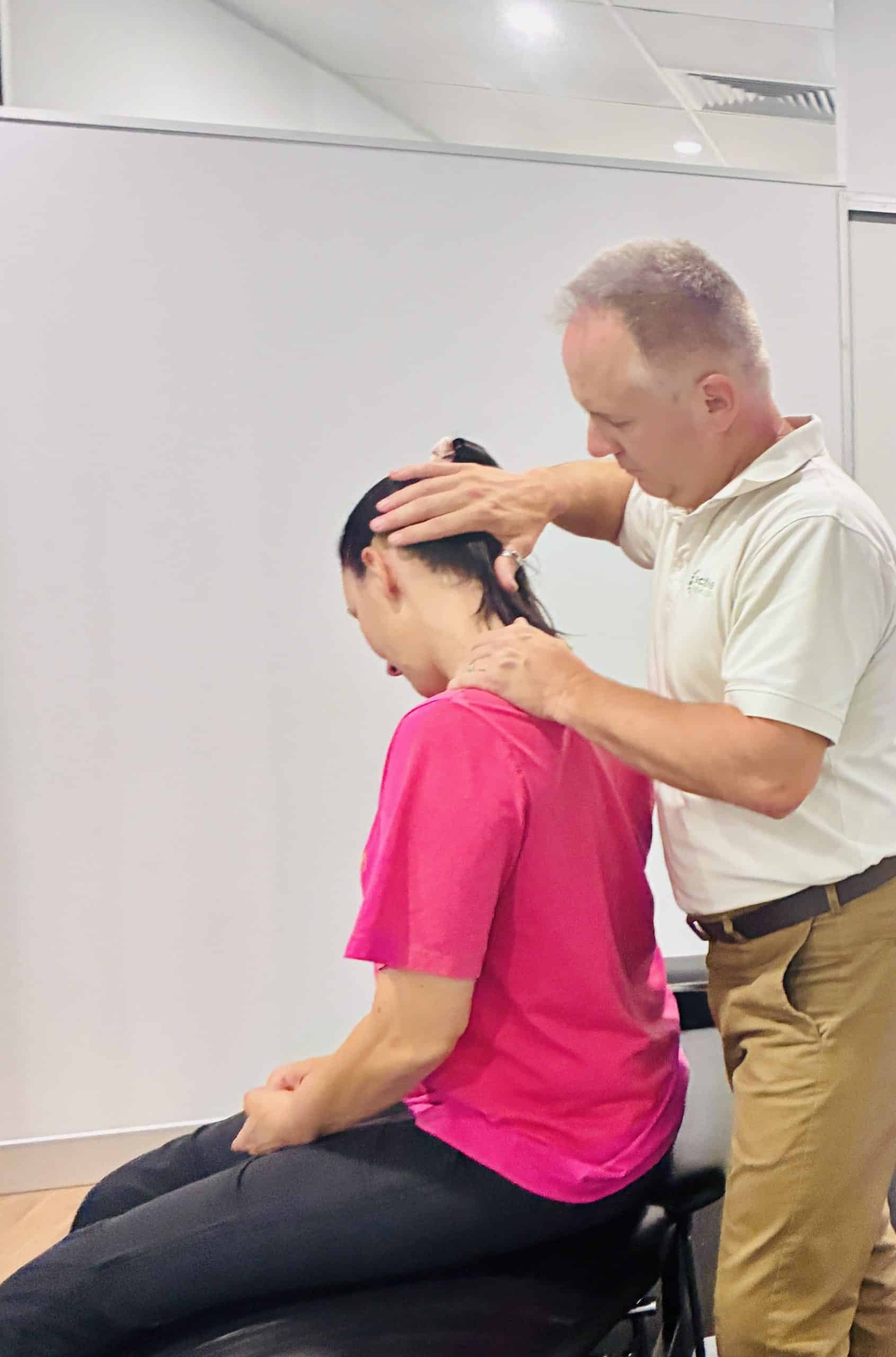
Range of motion in the lumbar spine and pelvis, orthopaedic testing including straight leg raise, neurological screening (reflexes, sensation, strength in the legs), and palpation of the lumbar and SI joints. Imaging referral if indicated.
I go through the assessment (and imaging if taken) in plain English. I discuss what is likely driving the pain, what may help, what I cannot promise, and what a care plan may look like.
Typically 12 visits over 6 to 8 weeks for an initial run of care, with a formal progress exam at visit 12. Pay as you go or take the 12-visit pre-pay package (10% discount). Bupa Member First, WorkCover, DVA, Medicare EPC and TYRO all supported at the counter.
Not every lower back pain presentation responds to chiropractic care in the same way. That is why I assess before I recommend, and why I am upfront about what I can and cannot do. If I do not think chiropractic care is the right fit for you, I will say so and point you towards who is.
 Dr Mark WhitfieldB.Sc.M.Chiropractic - Corrective Chiropractic Calamvale
Rebates + coverage
Lower back pain visits are covered under most private health extras, WorkCover claims, DVA White and Gold Cards, and Medicare Enhanced Primary Care (EPC) plans. I do not charge a gap on Medicare EPC visits.
Common questions
If the pain has not settled after a few days of normal activity, if it is sharp or stops you doing day-to-day tasks, or if there is any pain running down a leg, it is worth an assessment. Pain in both legs together, numbness, weakness, or any change in bowel or bladder function is urgent and should go to a GP or emergency department first.
Not always. Most mechanical lower back pain cases do not need imaging to start care safely. If the history or examination raises a concern, or if progress is slower than expected, I refer for imaging locally. The dirt bike fall case is an example of how I handle acute presentations while imaging is pending.
Honest answer: I do not know until I have assessed you. Some patients are back to normal after 3 or 4 visits. Others with long-standing or recurring issues work through the full 12-visit plan. The progress exam at visit 12 is where I measure outcomes against day one and decide the next step with you. Full detail on how many visits.
Many disc presentations respond well to conservative chiropractic care, particularly where the disc is irritated rather than frankly herniated. I screen first (straight leg raise, neurological testing, bowel and bladder clearance) and refer out if any finding changes that calculus. See the Medicare EPC lower back case for how I approach bilateral leg pain.
Yes to all four. Medicare covers up to 5 visits per calendar year on an EPC referral at $63.40 per visit, which I bulk bill with no gap. Bupa Member First claims instantly through TYRO. WorkCover approved claims are welcome. DVA White and Gold Cards are bulk billed at $77.05.
The new patient initial consultation is $105, or $101 for Bupa Member First members with the rebate ($76.40) claimed instantly at the counter leaving a $24.60 gap. Return visits are $71 across the board. Full fee list here.
The first step is the initial consult. No commitment. No pressure. Honest conversation.
Answered by Dr Mark Whitfield from real patient visits at the Calamvale clinic.
The underlying mechanical pattern (restricted joints, deconditioned stabilisers, habitual loading) usually predates the first flare. If we settle the symptom without addressing the pattern, loading the same tissue the same way produces the same pain again. The gym flare recurrence case walks through exactly this.
A drop table has small sections that release under light impulse, dropping a short distance to assist the adjustment. I use it on acute, inflamed, or guarded pelvises where manual rotation would be too intense. It delivers the same motion to the joint with less force.
Often, yes, if screening is clear. I check for red flags (bowel or bladder change, saddle numbness, fever, significant weakness) first. If any are present, I refer. If not, early intervention on acute mechanical pain generally settles faster than the same injury a week later.
Yes. Both are indications for care, not contraindications. I cannot reverse the structural change in either, but I can keep the surrounding joints moving and ease the muscular and joint pain that comes from carrying the asymmetry. The scoliosis + Medicare EPC case is one example.
Live booking. Confirmation sent within business hours.