Scoliosis is not a contraindication for chiropractic care. The myth that chiropractic is unsafe with scoliosis is just that, a myth. What I will not do is promise to straighten your curve. What I can do is work with your spine as it is, keep the joints around the curve moving, and ease the pain that comes from the surrounding muscles and joints working harder than they should.
Real cases from Dr Mark Whitfield's clinic. Patient details changed, individual results vary.
A 66 year old patient came in on a Medicare EPC referral with generalised full spine pain and a lifelong scoliosis. Here is why we do not try to straighten the scoliosis and what the initial intensive schedule looks like.
Read the case →A 25 year old woman came to us with upper back pain, recurring headaches and a lifelong scoliosis. Here is how the first five visits have gone.
Read the case →A 74 year old maintenance patient came in stiff and sore all over. Here is what we did and how she pulled up.
Read the case →The basics
A long-standing scoliosis is a lateral curve in the spine, usually combined with some rotation of the vertebrae. In adults it is almost always structural, meaning the shape of the spine itself is curved. It is not a disc or muscle problem that will be fixed by any treatment, chiropractic or otherwise. The curve stays with you.
What changes is how the curve is loaded, how much pain it generates, and how mobile the joints around it stay. Chiropractic adjustment keeps those joints moving, reduces the muscular ache that comes from the asymmetric loading, and in my experience lets scoliosis patients get on with their day without the pain being the dominant thing.
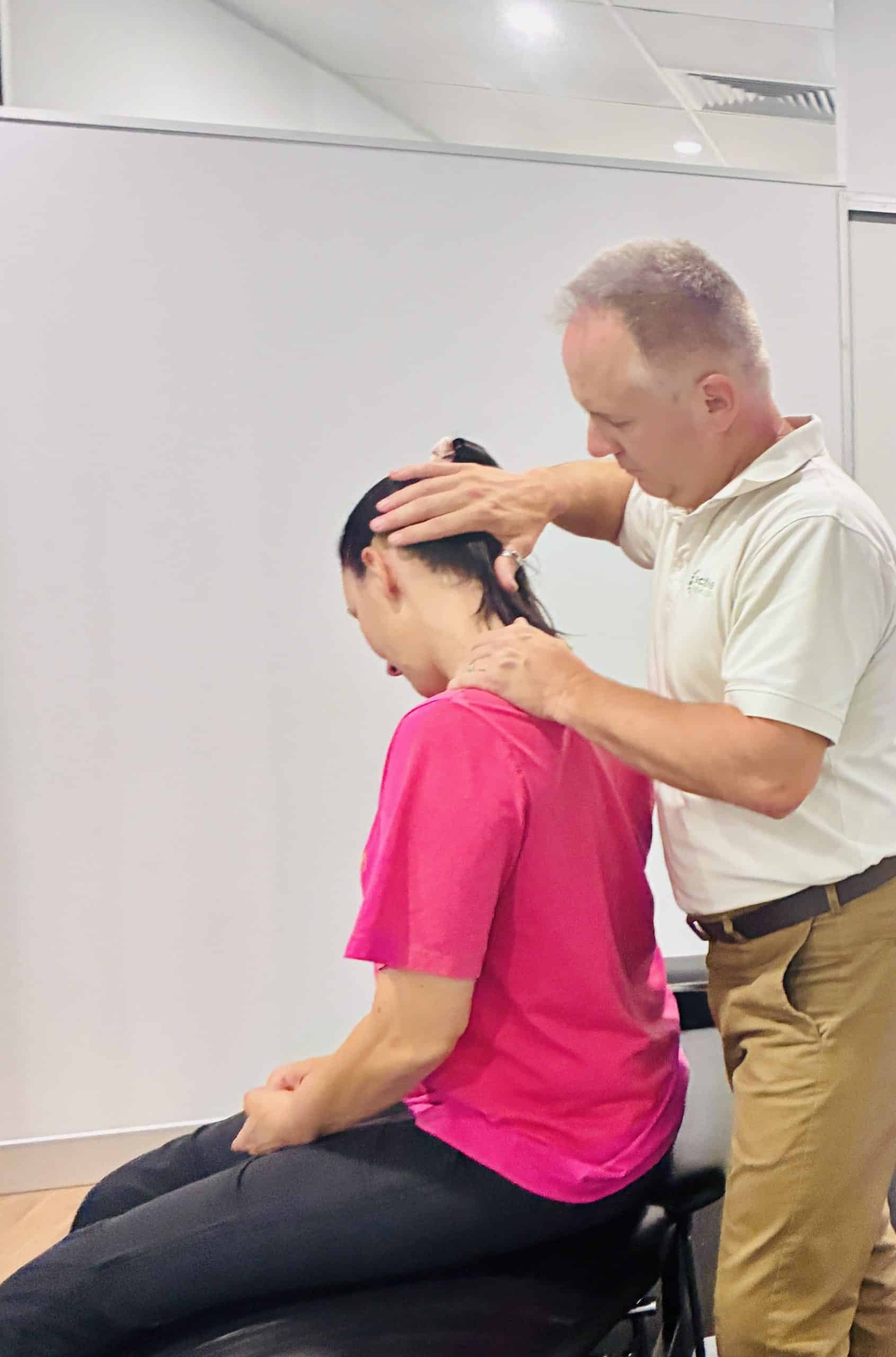
Our care approach
When was the scoliosis first diagnosed, has it been monitored, any prior treatment, what hurts now, what triggered this visit. If there are old x-rays, I want to see them.
Spinal palpation along the curve, range of motion, rib hump assessment, pelvic level check, neurological screen, orthopaedic testing. I almost always order x-rays if none are on file, so I know the Cobb angle and where the apex sits before I adjust.
I go through imaging and assessment findings in plain English. I am explicit about what chiropractic can and cannot do with a structural curve, and what a reasonable expectation looks like for your specific presentation.
Scoliosis patients often do well on a maintenance pattern rather than a short intensive. An initial run of 12 visits over 6 to 8 weeks to settle the current pain, then regular maintenance visits (monthly or every few weeks) to keep the joints around the curve moving. Medicare EPC covers 5 visits per year with no gap at the counter.
Chiropractic cannot straighten a long-standing scoliosis and I will not tell you otherwise. What I can do is work with your spine as it is, ease the pain that comes from asymmetric loading, and help you stay mobile. For most of my scoliosis patients, that is the win.
 Dr Mark WhitfieldB.Sc.M.Chiropractic - Corrective Chiropractic Calamvale
Rebates + coverage
Scoliosis-related chiropractic visits are covered under most private health extras, DVA cards, and Medicare EPC plans when a GP has referred. I do not charge a gap on Medicare EPC visits.
Common questions
Yes, when the practitioner understands the specific curve. Adjustments are tailored to work with the spinal mechanics you have. I assess first, review imaging, choose technique based on the structure, and progress carefully. The myth that scoliosis rules out chiropractic has no basis in practice.
No. A long-standing structural scoliosis cannot be reversed by chiropractic, physiotherapy, massage, or stretching. The curve is in the shape of the bones, not just the muscles. Any practitioner promising to straighten an adult scoliosis is overclaiming. What chiropractic can do is ease the day-to-day pain and maintain the mobility of the joints around the curve.
Almost always, yes, if you do not already have imaging on file. I want to know the Cobb angle, where the apex of the curve sits, whether the pelvis is level, and whether there is any rotational or degenerative component. That information tells me exactly how to tailor the technique.
Technique is matched to the person and the curve. I use a mix of manual adjustments, drop table, activator (a spring-loaded instrument delivering a very light impulse), and mobilisation. Scoliosis patients often do well with a lighter mechanical technique rather than high-force manual adjustment, particularly around the apex of the curve.
Usually more frequent at the start (twice weekly for the first couple of weeks) to settle the current pain, then weekly, then dropping to maintenance (once every few weeks to once a month) once the pattern has settled. The exact schedule gets adjusted as we go. The full spine scoliosis case shows what the initial intensive looks like.
Medicare covers up to 5 chiropractic visits per calendar year under the Enhanced Primary Care (EPC) plan, which your GP must approve. Each visit is covered at $63.40. I bulk bill EPC visits with no gap at the counter, so there is nothing out of pocket for those 5 visits.
A thorough first-visit assessment. Imaging review. Honest conversation about what chiropractic can and cannot do with a structural curve.
Answered by Dr Mark Whitfield from real patient visits at the Calamvale clinic.
No. Chiropractic cannot reverse a long-standing scoliosis and attempting to do so is a common misconception. What chiropractic can do is work with the spinal curve rather than against it, keep the joints around the curve moving, and ease the pain that comes from the surrounding muscles and joints working harder than they should.
Yes, for pain and function. Chiropractic cannot reverse scoliosis, but it can work with the spinal curve rather than against it, ease associated pain in the surrounding joints and muscles, and help manage symptoms. Many long-standing scoliosis patients find care reduces discomfort and the headaches that often accompany structural curves.
The purpose of an initial intensive schedule is to break the pattern of restriction quickly rather than letting it reset between slow-spaced visits. Two adjustments per week for two or three weeks typically creates faster symptom relief and better early mobility. Once the pattern has shifted I taper to weekly, then to maintenance.
In most cases, yes, but adolescent scoliosis is a different clinical conversation to adult scoliosis because the curve can still progress. If a child or teenager has an actively progressing scoliosis, the primary clinician is usually an orthopaedic specialist and I co-manage the pain and mobility rather than lead the case. Any manual work is tailored to the individual.
Live booking. Confirmation sent within business hours.